



30a. Wilmot's Proviso
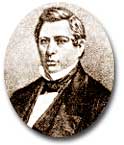
David Wilmot proposal divided both parties along sectional lines.
By the standards of his day, David Wilmot could be considered a racist.
Yet the Pennsylvania representative was so adamantly against the extension of slavery to lands ceded by Mexico, he made a proposition that would divide the Congress. On August 8, 1846, Wilmot introduced legislation in the House that boldly declared, "neither slavery nor involuntary servitude shall ever exist" in lands won in the Mexican-American War. If he was not opposed to slavery, why would Wilmot propose such an action? Why would the north, which only contained a small, but growing minority, of abolitionists, agree?
 Provided, That, as an express and fundamental condition to the acquisition of any territory from the Republic of Mexico by the United States, by virtue of any treaty which may be negotiated between them, and to the use by the Executive of the moneys herein appropriated, neither slavery nor involuntary servitude shall ever exist in any part of said territory, except for crime, whereof the party shall first be duly convicted.
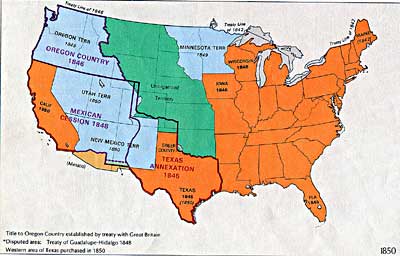
The status of the territories regarding slavery had not been decided by the beginning of the Mexican War. Even before the war ended the issue of slavery in the region of the Mexican Cession was a hot-button political issue.
Wilmot and other northerners were angered by President Polk. They felt that the entire Cabinet and national agenda were dominated by southern minds and southern principles. Polk was willing to fight for southern territory, but proved willing to compromise when it came to the north. Polk had lowered the tariff and denied funds for internal improvements, both to the dismay of northerners. Now they felt a war was being fought to extend the southern way of life. The term "Slave Power" jumped off the lips of northern lawmakers when they angrily referred to their southern colleagues. It was time for northerners to be heard.
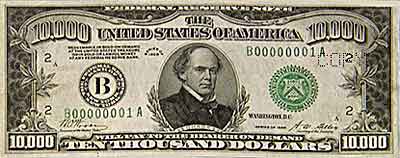
Salmon P. Chase, commemorated on the $10,000 bill, founded the Free Soil Party in 1848. This party advocated an end to the spread of American slavery and elected 14 representatives and two senators to the federal government.
Though Wilmot's heart did not bleed for the slave, he envisioned California as a place where free white Pennsylvanians could work without the competition of slave labor. Since the north was more populous and had more Representatives in the House, the Wilmot Proviso passed. Laws require the approval of both houses of Congress, however. The Senate, equally divided between free states and slave states could not muster the majority necessary for approval. Angrily the House passed Wilmot's Proviso several times, all to no avail. It would never become law.
For years, the arguments for and against slavery were debated in the churches and in the newspapers. The House of Representatives had passed a gag rule forbidding the discussion of slavery for much of the previous decade. The issue could no longer be avoided. Lawmakers in the House and Senate, north and south, would have to stand up and be counted.