
4c. Measuring Public Opinion
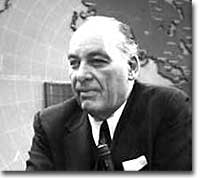
It all started in 1932 when his mother-in-law ran for public office in Iowa. She was running against a popular incumbent, and everyone except him thought her candidacy was a lost cause. He polled her constituency, told her she could win, and gave her some advice. Hers was only the first of many elections he was to predict correctly.
His name was George Gallup — the founder of modern polling.
Since then, polling organizations have proliferated, so that they now play a vital role in American politics. They are able to measure public opinion so accurately because they have carefully developed some very precise methods.
Polls generally start when someone wants a political question answered. For example, a candidate may wonder, "How many people in my district know who I am and what I do?" Polls can give some answers, which can help him or her plan a campaign for office. Or a newspaper may want to know, "How do people in this country feel about big tobacco companies?" The publisher can commission a poll, and a reporter can base a story on the research findings. The pollsters then follow several important steps in gathering accurate statistics:
- Questions must be carefully and objectively worded.
For example, consider a question such as, "How much do you resent the deceptiveness of big tobacco companies?" You could hardly expect an accurate answer. Sometimes the slightest shift in the wording of a question can bring very different results. - The sample must be randomly selected.
First, pollsters determine the universe, or the entire group whose attitudes they wish to measure. Since it is generally impossible to question everyone, they must use random sampling, a method of selection that gives each potential member of the universe the same chance of being selected. For example, if the universe is 30% urban, 40% Mexican American, and 50% male, so should the sample be. - Respondents must be contacted in a cost efficient way.
However, accuracy cannot be sacrificed to efficiency. For example, a straw poll that asks television viewers to call in their opinions is generally not very accurate. After all, the people that call in usually feel very strongly about the issue. And some of them call in more than once. Telephone polls are probably used most commonly today, partly because of the capability of random-digit dialing.
Should politicians monitor the polls? Candidates have been criticized for "waffling" — shifting their positions based on the results of public opinion polls. But if a politicians is supposed to represent the true will of the people, shouldn't public opinion be highly regarded. Americans have different opinions about whether a leader is expected to use his or her own judgment or reflect the viewpoints of his or her constituency.
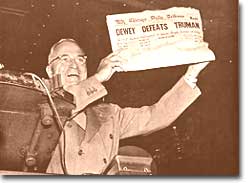
Poll results must be carefully and accurately compiled and reported. This is not always an easy task, especially for tracking polls that are measuring changing public opinion. A good example is an election poll. Statistics that are a week old are not usually very reliable when trying to predict a close presidential race.
Polls can never be completely accurate because a sample cannot replicate the universe exactly. Pollsters allow for this slight chance of inaccuracy with a margin of error. Standard samples of about 1,000 to 1,500 individuals can usually represent a universe of millions of people with only a small amount of error. A typical margin of error — a measure of the accuracy of a public opinion poll — is about 3%. In a poll that says that 52% of the respondents favor Janet Smith for Mayor, somewhere between 49% (-3) and 55% (+3) of the voters actually do support her. You can see how predicting a close election can be very difficult.
Given the challenges of accurate polling of public opinion, it is amazing that polls that follow the right steps almost always make the right predictions. They've come a long way since George Gallup helped his mother-in-law win her election in 1932.