



34d. The Southern Homefront
After the initial months of the war, the South was plagued with shortages of all kinds. It started with clothing. As the first winter of the war approached, the Confederate army needed wool clothing to keep their soldiers warm. But the South did not produce much wool and the Northern blockade prevented much wool from being imported from abroad. People all over the South donated their woolens to the cause. Soon families at home were cutting blankets out of carpets.
Almost all the shoes worn in the South were manufactured in the North. With the start of the war, shipments of shoes ceased and there would be few new shoes available for years. The first meeting of Confederate and Union forces at Gettysburg arose when Confederates were investigating a supply of shoes in a warehouse.
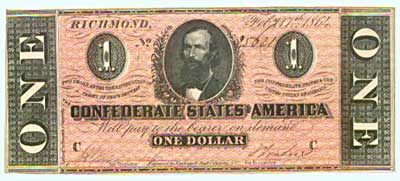
By the end of the Civil War, Confederate money wasn't worth the paper it was printed on.
Money was another problem. The South's decision to print more money to pay for the war simply led to unbelievable increases in price of everyday items. By the end of 1861, the overall rate of inflation was running 12% per month. For example, salt was the only means to preserve meat at this time. Its price increased from 65¢ for a 200 pound bag in May 1861 to $60 per sack only 18 months later. Wheat, flour, corn meal, meats of all kinds, iron, tin and copper became too expensive for the ordinary family. Profiteers frequently bought up all the goods in a store to sell them back at a higher price. It was an unmanageable situation. Food riots occurred in Mobile, Atlanta and Richmond. Over the course of the war, inflation in the South caused prices to rise by 9000%.
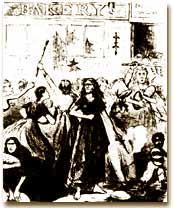
The women of Richmond rioted on April 2, 1863, until Jefferson Davis threw them all of his pocket change and threatened to order the militia to fire upon the crowd.
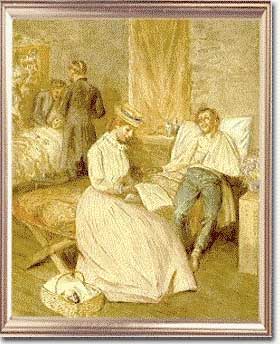
Women's roles changed dramatically. The absence of men meant that women were now heads of households. Women staffed the Confederate government as clerks and became schoolteachers for the first time. Women at first were denied permission to work in military hospitals as they were exposed to "sights that no lady should see." But when casualties rose to the point that wounded men would die in the streets due to lack of attention, female nurses such as Sally Louisa Tompkins and Kate Cumming would not be denied. Indeed, by late 1862, the Confederate Congress enacted a law permitting civilians in military hospitals, giving preference to women.
The most unpopular act of the Confederate government was the institution of a draft. Loopholes permitted a drafted man to hire a substitute, leading many wealthy men to avoid service. When the Confederate Congress exempted anyone who supervised 20 slaves, dissension exploded. Many started to conclude that it was "a rich man's war and a poor man's fight." This sentiment and the suffering of their families led many to desert the Confederate armies.
By November 1863, James Seddon, the Confederate Secretary of War said he could not account for 1/3 of the army. After the fall of Atlanta, soldiers worried more about their families then staying to fight for their new country. Much of the Confederate army started home to pick up the pieces of their shattered lives.