



33h. Northern Plans to End the War
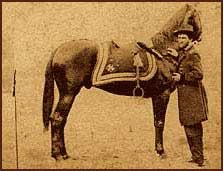
Only one day after their victory at Gettysburg, Union forces captured Vicksburg, the last Confederate stronghold on the Mississippi River. Lincoln and Union commanders began to make plans for finishing the war.
The Union strategy to win the war did not emerge all at once. By 1863, however, the Northern military plan consisted of five major goals:- Fully blockade all Southern coasts. This strategy, known as the Anaconda Plan, would eliminate the possibility of Confederate help from abroad.
- Control the Mississippi River. The river was the South's major inland waterway. Also, Northern control of the rivers would separate Texas, Louisiana, and Arkansas from the other Confederate states.
- Capture Richmond. Without its capital, the Confederacy's command lines would be disrupted.
- Shatter Southern civilian morale by capturing and destroying Atlanta, Savannah, and the heart of Southern secession, South Carolina.
- Use the numerical advantage of Northern troops to engage the enemy everywhere to break the spirits of the Confederate Army.
By early 1864, the first two goals had been accomplished. The blockade had successfully prevented any meaningful foreign aid. General Ulysses Grant's success at Vicksburg delivered the Mississippi River to the Union. Lincoln turned to Grant to finish the job and, in the spring of 1864, appointed Grant to command the entire Union Army.
Grant had a plan to end the war by November. He mounted several major simultaneous offensives. General George Meade was to lead the Union's massive Army of the Potomac against Robert E. Lee. Grant would stay with Meade, who commanded the largest Northern army. General James Butler was to advance up the James River in Virginia and attack Richmond, the capital of the Confederacy. General William Tecumseh Sherman was to plunge into the heart of the South, inflicting as much damage as he could against their war resources.
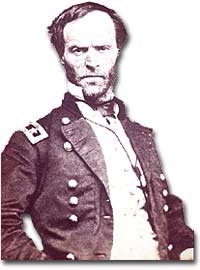
One week after Abraham Lincoln's reelection in 1864, William Tecumseh Sherman (above) began his merciless march through Georgia, leaving nothing behind but civilian sorrow and scorched earth. Both Atlanta and Savannah would fall back to Union control during this campaign.
Meade faced Lee's army in Virginia. Lee's strategy was to use terrain and fortified positions to his advantage, thus decreasing the importance of the Union's superiority in numbers. He hoped to make the cost of trying to force the South back into the Union so high that the Northern public would not stand for it. He almost accomplished this. From May 5 to May 24, the full force of Grant's and Lee's armies fought continually with enormous casualties.
But, unlike the Union commanders of the past, Grant had the determination to press on despite the cost. Twenty-eight thousand soldiers were casualties of the Battle of the Wilderness. A few days later, another 28,000 soldiers were casualties in the battle of Spotsylvania Court House. More than two-thirds of the casualties of these battles were Union soldiers.
At Cold Harbor the following week, Grant lost another 13,000 soldiers — 7,000 of them in half an hour. In the 30 days that Grant had been fighting Lee, he lost 50,000 troops — a number equal to half the size of the Confederate army at the time. As a result, Grant became known as "The Butcher." Congress was appalled and petitioned for his removal. But Lincoln argued that Grant was winning the battles and refused to grant Congress's request.
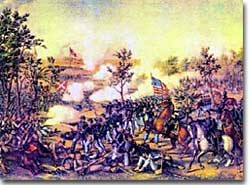
William T. Sherman's ruthless march through the South to the sea drove a stake into the heart of the Confederacy. He left nothing in his wake, destroying everything in sight in an attempt to crush the rebellion once and for all.
Butler failed to capture Richmond, and the Confederate capital was temporarily spared. On May 6, one day after Grant and Lee started their confrontation in the Wilderness, Sherman entered Georgia, scorching whatever resources that lay in his path. By late July, he had forced the enemy back to within sight of Atlanta. For a month, he lay siege to the city. Finally, in early September he entered Atlanta — one day after the Confederate army evacuated it.
Sherman waited until seven days after Lincoln's hotly fought reelection before putting Atlanta to the torch and starting his march to the sea. No one stood before him. His soldiers pillaged the countryside and destroyed everything of conceivable military value as they traveled 285 miles to Savannah in a march that became legendary for the misery it created among the civilian population. On December 22, Savannah fell.
Next, Sherman ordered his army to move north into South Carolina. Their intent was to destroy the state where secession began. Exactly a month later, its capital, Columbia, fell to him. On the same day, Union Forces retook Fort Sumter.
The war was almost over.