



1a. Diversity of Native American Groups
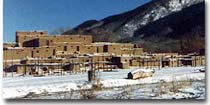
The structures Native Americans called home were extremely varied and often exclusive to tribe or region. These "apartment" style dwellings were the work of Natives of the Southwest.
Since 1492, European explorers and settlers have tended to ignore the vast diversity of the people who had previously lived here. It soon became common to lump all such groups under the term "Indian." In the modern American world, we still do. There are certain experiences common to the survivors of these tribes. They all have had their lands compromised in some way and suffered the horrors of reservation life.

Language Lessons
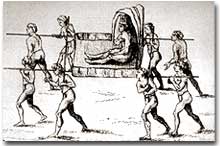
The Natchez chief, known as "Great Sun," was a powerful Indian leader. Unlike some Indian leaders, "Great Sun" ruled as an absolute monarch.
Stereotyping Indians in this way denies the vast cultural differences between tribes. First, there is the issue of language. The Navajo people of the Southwest and the Cherokees of the Southeast have totally unrelated languages.
There were over 200 North American tribes speaking over 200 different languages. The United States used the uniqueness of the Navajo language to its advantage in World War II. Rather than encrypting radio messages, it proved simpler to use Navajos to speak to each other in their everyday language to convey high-security messages. It worked.
Navajo Code Talkers
Between 1942 and 1945, about 400 Navajos served as code talkers for the U.S. Marines. They could encode, transmit, and decode a message in a fraction of the time it took a machine to do the same. And unlike with machine codes, the Japanese were never able to break the Navajo code.
Excerpts from the Navajo Code Talkers' Dictionary
| MEANING | NAVAJO PRONUNCIATION | LITERAL TRANSLATION |
|---|---|---|
| ALASKA | BEH-HGA | WITH WINTER |
| AMERICA | NE-HE-MAH | OUR MOTHER |
| BOMBER PLANE | JAY-SHO | BUZZARD |
| BOMB | A-YE-SH | EGGS |
| BOOBY TRAP | DINEH-BA-WHOA-BLEHI | MAN TRAP |
| GERMANY | BESH-BE-CHA-HE | IRON HAT |
| PLATOON | HAS-CLISH-NIH | MUD |
| FIGHTER PLANE | DA-HE-TIH-HI | HUMMING BIRD |
| MINUTE | AH-KHAY-EL-KIT-YAZZIE | LITTLE HOUR |
| PROBLEM | NA-NISH-TSOH | BIG JOB |
| PYROTECHNIC | COH-NA-CHANH | FANCY FIRE |
| ROUTE | GAH-BIH-TKEEN | RABBIT TRAIL |
| SPAIN | DEBA-DE-NIH | SHEEP PAIN |
| TANK DESTROYER | CHAY-DA-GAHI-NAIL-TSAIDI | TORTOISE KILLER |
– excerpted from the Navajo Code Talkers' Dictionary (revised as of June 15, 1945), Department of the Navy
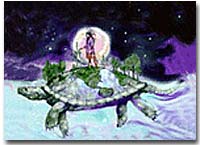
"In the beginning, this place was only darkness and water until the time when a woman fell from the sky world." Thus starts the Oneida creation story. Every Native American tribe has their own history, culture, and art.
Different Strokes for Different Folks
Lifestyles varied greatly. Most tribes were domestic, but the Lakota followed the buffalo as nomads. Most engaged in war, but the Apache were particularly feared, while the Hopis were pacifistic. Most societies were ruled by men, but the Iroquois women chose the leaders.
Native Americans lived in wigwams, hogans, igloos, tepees, and longhouses. Some relied chiefly on hunting and fishing, while others domesticated crops. The Algonkian chiefs tried to achieve consensus, but the Natchez "Sun" was an absolute monarch. The totem pole was not a universal Indian symbol. It was used by tribes such as the Chinook in the Pacific Northwest to ward off evil spirits and represent family history.
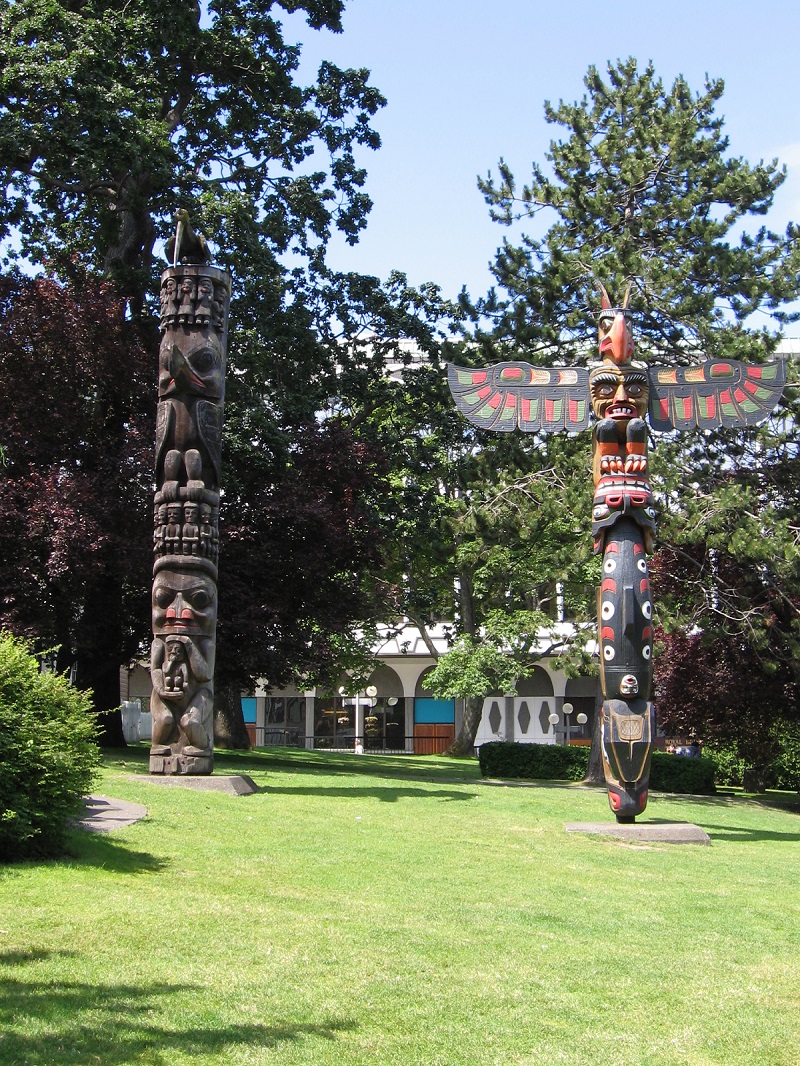
It is important that students of history explore tribal nuances. Within every continent, there is tremendous diversity. The tribal differences that caused the Apache and Navajo peoples to fight each other are not so different from the reasons Germans fought the French. Recognizing tribal diversity is an important step in understanding the history of America.