


42b. Muckrakers
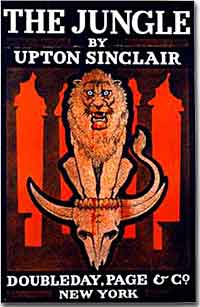
Upton Sinclair published The Jungle in 1905 to expose labor abuses in the meat packing industry. But it was food, not labor, that most concerned the public. Sinclair's horrific descriptions of the industry led to the passage of the Pure Food and Drug Act and the Meat Inspection Act, not to labor legislation.
The pen is sometimes mightier than the sword.
It may be a cliché, but it was all too true for journalists at the turn of the century. The print revolution enabled publications to increase their subscriptions dramatically. What appeared in print was now more powerful than ever. Writing to Congress in hopes of correcting abuses was slow and often produced zero results. Publishing a series of articles had a much more immediate impact. Collectively called muckrakers, a brave cadre of reporters exposed injustices so grave they made the blood of the average American run cold.
Steffens Takes on Corruption
The first to strike was Lincoln Steffens. In 1902, he published an article in McClure's magazine called "Tweed Days in St. Louis." Steffens exposed how city officials worked in league with big business to maintain power while corrupting the public treasury.
More and more articles followed, and soon Steffens published the collection as a book entitled The Shame of the Cities. Soon public outcry demanded reform of city government and gave strength to the progressive ideas of a city commission or city manager system.
Tarbell vs. Standard Oil
Ida Tarbell struck next. One month after Lincoln Steffens launched his assault on urban politics, Tarbell began her McClure's series entitled "History of the Standard Oil Company." She outlined and documented the cutthroat business practices behind John Rockefeller's meteoric rise. Tarbell's motives may also have been personal: her own father had been driven out of business by Rockefeller.
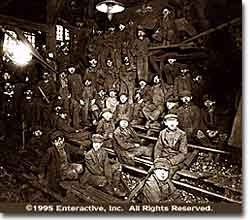
John Spargo's 1906 The Bitter Cry of the Children exposed hardships suffered by child laborers, such as these coal miners. "From the cramped position [the boys] have to assume," wrote Spargo, "most of them become more or less deformed and bent-backed like old men ... "
Once other publications saw how profitable these exposés had been, they courted muckrakers of their own. In 1905, Thomas Lawson brought the inner workings of the stock market to light in Frenzied Finance. John Spargo unearthed the horrors of child labor in The Bitter Cry of the Children in 1906. That same year, David Phillips linked 75 senators to big business interests in The Treason of the Senate. In 1907, William Hard went public with industrial accidents in the steel industry in the blistering Making Steel and Killing Men. Ray Stannard Baker revealed the oppression of Southern blacks in Following the Color Line in 1908.
The Meatpacking Jungle
Perhaps no muckraker caused as great a stir as Upton Sinclair. An avowed Socialist, Sinclair hoped to illustrate the horrible effects of capitalism on workers in the Chicago meatpacking industry. His bone-chilling account, The Jungle, detailed workers sacrificing their fingers and nails by working with acid, losing limbs, catching diseases, and toiling long hours in cold, cramped conditions. He hoped the public outcry would be so fierce that reforms would soon follow.
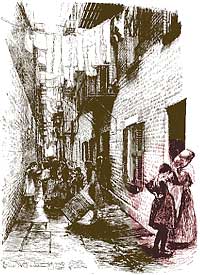
The clamor that rang throughout America was not, however, a response to the workers' plight. Sinclair also uncovered the contents of the products being sold to the general public. Spoiled meat was covered with chemicals to hide the smell. Skin, hair, stomach, ears, and nose were ground up and packaged as head cheese. Rats climbed over warehouse meat, leaving piles of excrement behind.
Sinclair said that he aimed for America's heart and instead hit its stomach. Even President Roosevelt, who coined the derisive term "muckraker," was propelled to act. Within months, Congress passed the Pure Food and Drug Act and the Meat Inspection Act to curb these sickening abuses.