30d. The Compromise of 1850
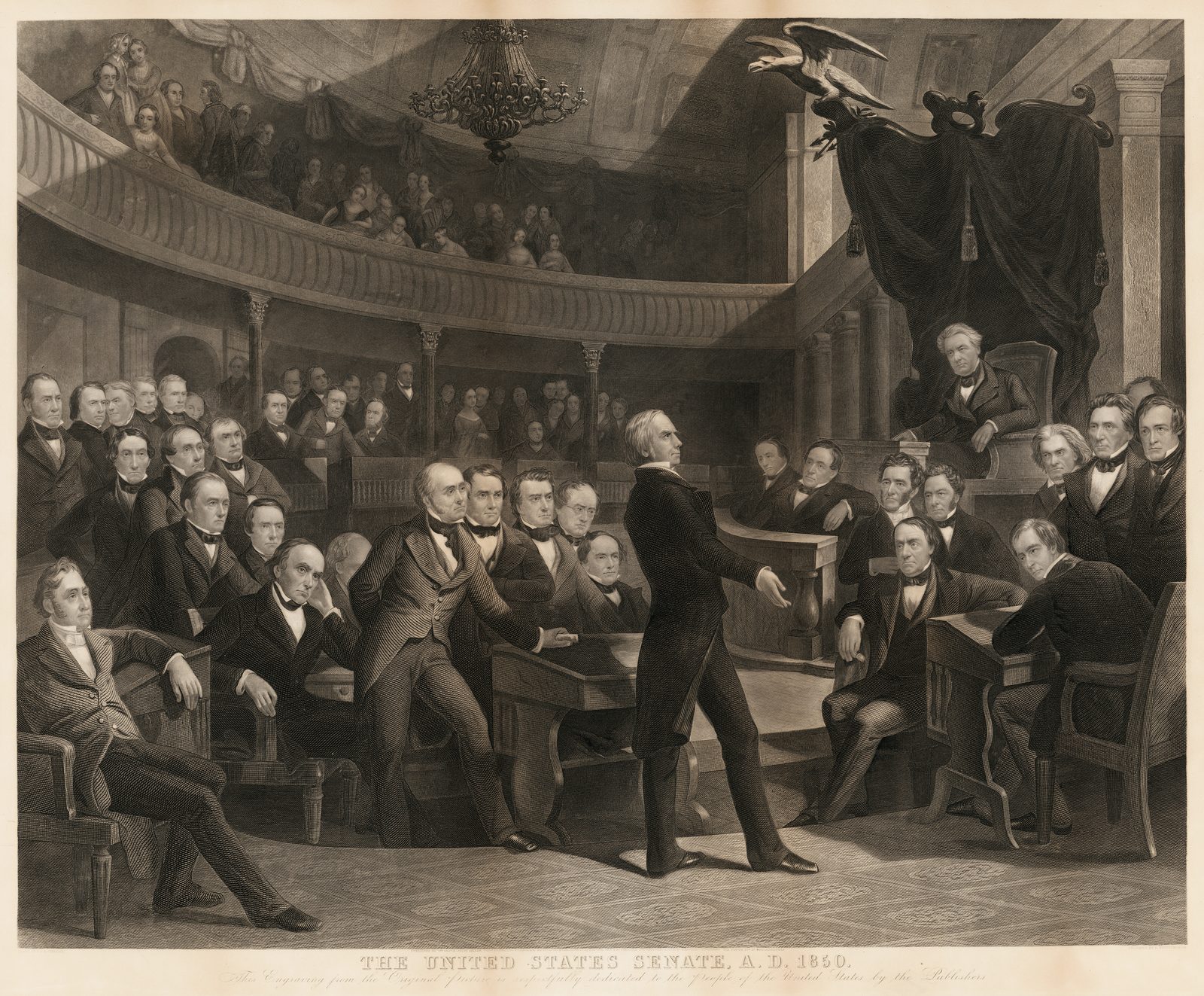
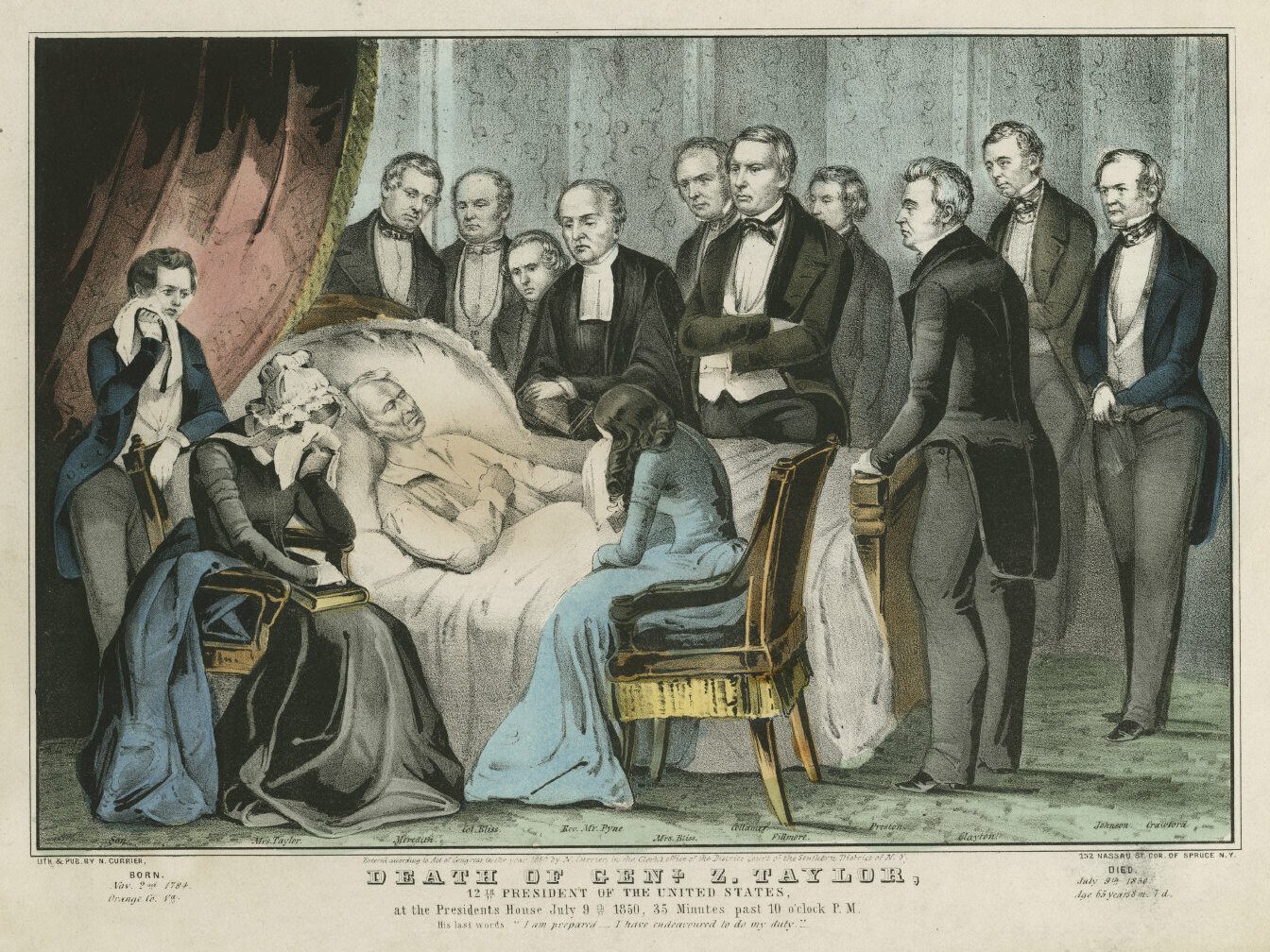
The plan was set forth. The giants — Calhoun, Webster, and Clay — had spoken. Still the Congress debated the contentious issues well into the summer. Each time Clay's Compromise was set forth for a vote, it did not receive a majority. Henry Clay himself had to leave in sickness, before the dispute could be resolved. In his place, Stephen Douglas worked tirelessly to end the fight. On July 9, President Zachary Taylor died of food poisoning. His successor, Millard Fillmore, was much more interested in compromise. The environment for a deal was set. By September, Clay's Compromise became law.
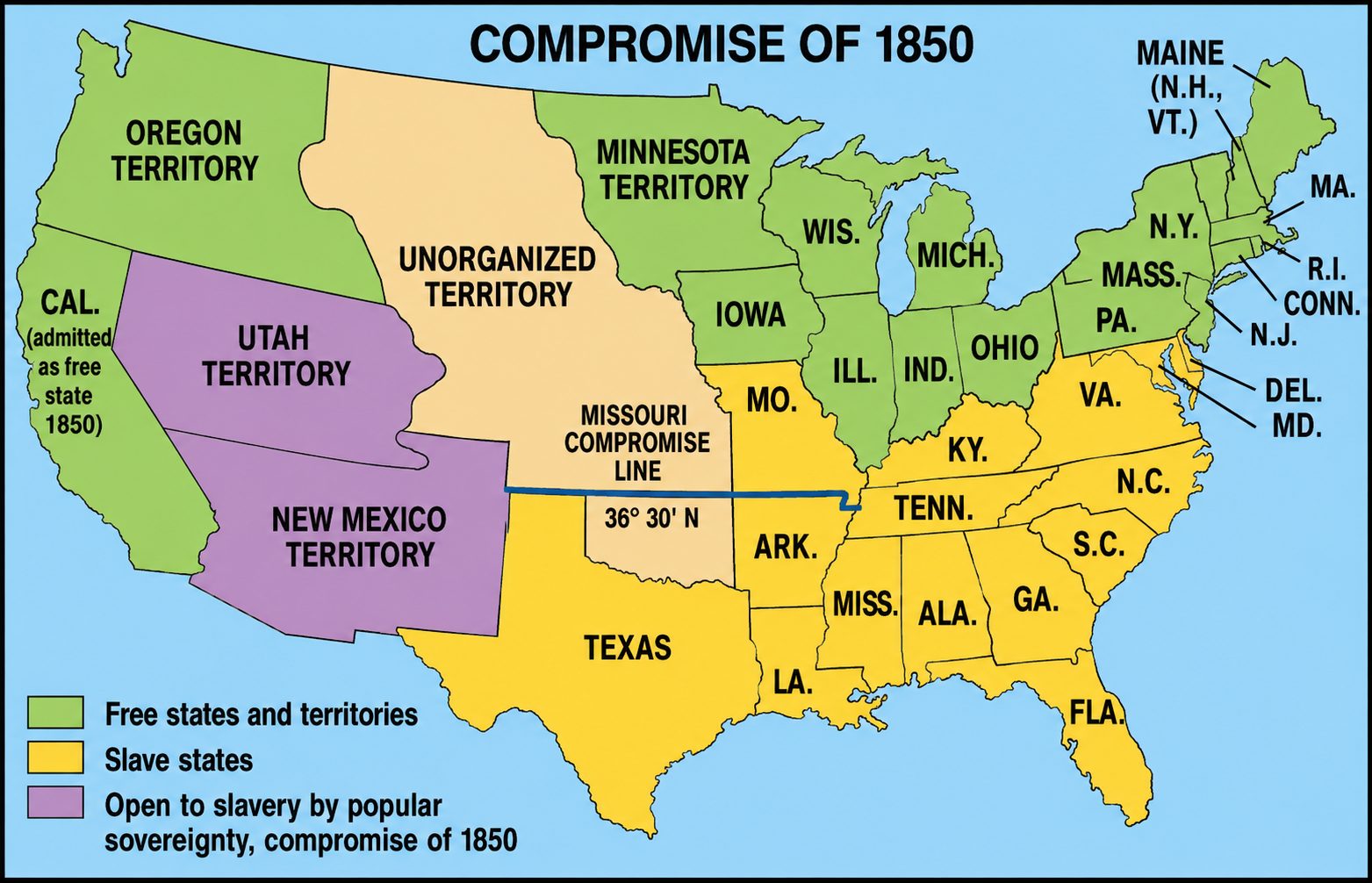
California was admitted to the Union as the 16th free state. In exchange, the south was guaranteed that no federal restrictions on slavery would be placed on Utah or New Mexico. Texas lost its boundary claims in New Mexico, but the Congress compensated Texas with $10 million. Slavery was maintained in the nation's capital, but the slave trade was prohibited. Finally, and most controversially, a Fugitive Slave Law was passed, requiring northerners to return runaway slaves to their owners under penalty of law.
Compromise of 1850
| North Gets | South Gets |
|---|---|
| California admitted as a free state | No slavery restrictions in Utah or New Mexico territories |
| Slave trade prohibited in Washington D.C. | Slaveholding permitted in Washington D.C. |
| Texas loses boundary dispute with New Mexico | Texas gets $10 million |
| Fugitive Slave Law |
Who won and who lost in the deal? Although each side received benefits, the north seemed to gain the most. The balance of the Senate was now with the free states, although California often voted with the south on many issues in the 1850s. The major victory for the south was the Fugitive Slave Law. In the end, the north refused to enforce it. Massachusetts even called for its nullification, stealing an argument from John C. Calhoun. Northerners claimed the law was unfair. The flagrant violation of the Fugitive Slave Law set the scene for the tempest that emerged later in the decade. But for now, Americans hoped against hope that the fragile peace would prevail.